 ⬇️
⬇️
Key Takeaways
- Donald Trump praised Andy Burnham’s business instincts while rejecting international controls on artificial intelligence.
- Divergent US and UK approaches to AI governance could complicate technology investment, compliance and data-centre planning.
- Iran-related energy disruption links foreign policy directly to inflation, infrastructure costs and the AI power race.
Donald Trump and UK prime minister Andy Burnham presented a cordial public front at the UN assembly in New York, but their meeting exposed substantial differences over artificial intelligence and Iran. The US president called Burnham "a natural businessperson," offering a personal endorsement even as the two governments remained divided on policies carrying consequences for technology companies, energy suppliers and investors.
Trump used particularly forceful language on AI governance. He rejected what he described as a "globalist scheme" to control the technology and argued that the US should lead the development of "superintelligence." That position points toward a competitive, nationally driven model in which technological capability and infrastructure scale receive greater emphasis than coordinated international oversight.
Burnham faces a different set of political and commercial pressures. The UK depends heavily on cooperation with US technology companies, investors and research institutions, yet it also operates alongside the European regulatory market. The EU AI Act, adopted in 2024, uses legally defined risk categories and obligations. By comparison, the NIST AI Risk Management Framework, published in 2023, offers a voluntary structure for identifying and managing AI risks.
That gap matters to Microsoft, OpenAI and other businesses deploying models across jurisdictions. A product developed under a US-led, innovation-first policy may still encounter stricter requirements when offered in the UK or European Union. Companies could face different expectations around testing, documentation, transparency and accountability.
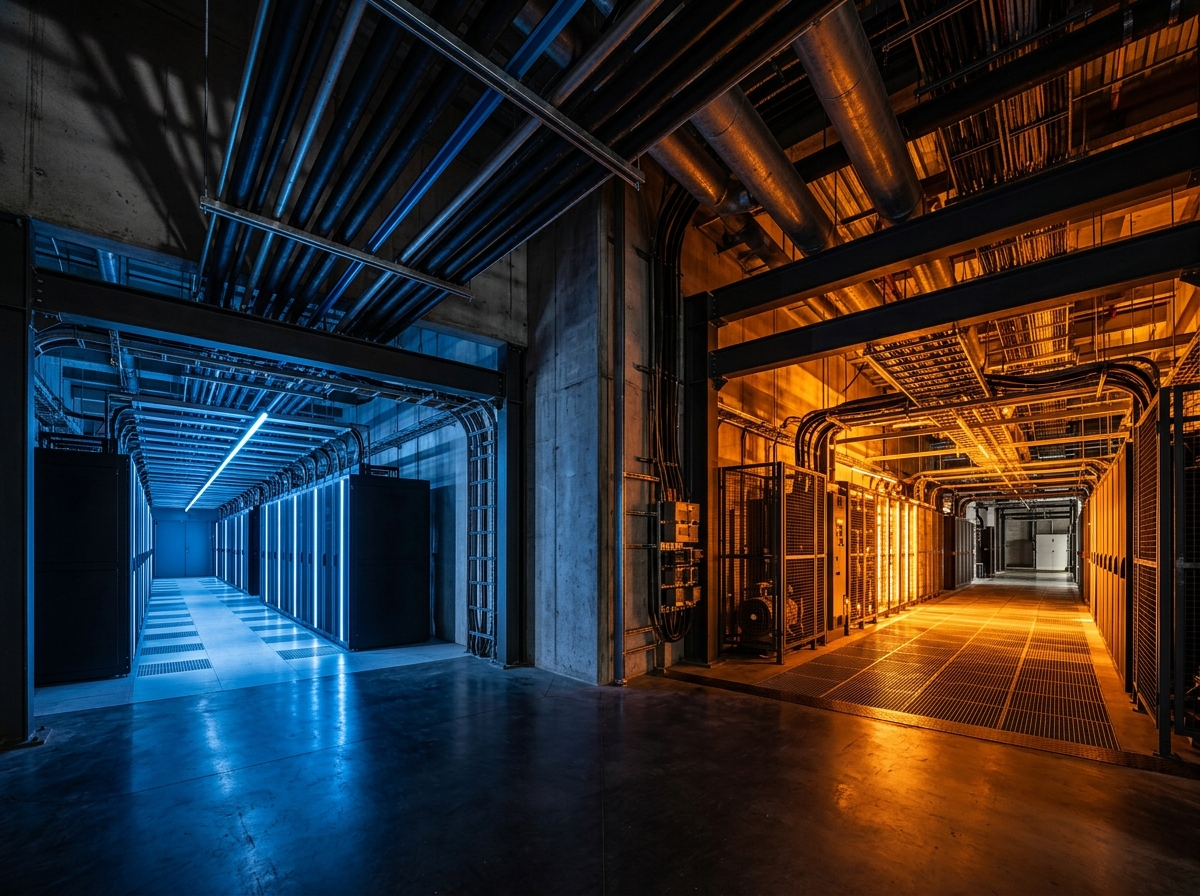
AI policy is no longer only about algorithms; it is increasingly about power plants, grid connections, construction permits and access to advanced computing equipment.
Global data-centre electricity consumption is projected to rise from about 415 TWh in 2024 to roughly 945 TWh by 2030, approaching 3% of worldwide electricity demand. Data Center Knowledge has highlighted IEA projections showing how rapidly data-centre demand could outpace grid development. AI-focused data-centre electricity demand is expected to triple between 2025 and 2030, while overall data-centre demand nearly doubles.
The geography is concentrated, too. The US, China and Europe are expected to account for more than 85% of new data-centre capacity over the next decade. That makes AI infrastructure a geopolitical asset as well as a commercial one. Global data-centre investment is expected to reach approximately $580 billion in 2025, exceeding projected investment in global oil supply. Few figures better illustrate the collision between digital and conventional energy priorities.
Where does Iran fit into this? Quite directly. Trump’s Iran policy has disrupted oil supplies and added inflationary pressure in the UK, according to The Guardian. Higher energy prices can flow through to transport, manufacturing and household bills. They can also affect the economics of operating power-intensive data centres, especially where electricity markets remain exposed to global fuel prices.
This creates a delicate balancing act for Burnham. Preserving a productive relationship with Washington can support investment and collaboration involving Microsoft, OpenAI and industrial groups such as Rolls-Royce. At the same time, UK policymakers face pressure to contain energy costs, maintain credible AI safeguards and avoid excessive reliance on infrastructure decisions made elsewhere.
For business leaders, the warm language between Trump and Burnham should not obscure the policy divergence. Board-level planning increasingly needs to account for regulatory fragmentation, electricity availability and geopolitical supply shocks in the same conversation. The personal rapport may help keep negotiations moving. The harder work will involve translating that goodwill into workable rules, stable energy arrangements and investment conditions that survive the next disagreement.