 ⬇️
Key Takeaways
- The FBI reportedly took custody of FAA network equipment tied to the Nov. 13, 2026, nationwide air traffic control disruption.
- Investigators are examining hardware failure, configuration mistakes, and installation work, while reporting has identified no current evidence of malicious activity.
- The incident highlights the operational risks surrounding network changes, traffic controls, and aging critical infrastructure.
The FBI has reportedly taken custody of an FAA router and related equipment linked to the four-hour nationwide ground stop on Nov. 13, 2026. The hardware was moved to an L3Harris laboratory in Florida, where FBI investigators and FAA personnel are expected to examine the equipment and attempt to reproduce the network instability.
The disruption extended far beyond one Arkansas installation. According to FedScoop, instability affected 17 of the FAA's 22 Air Route Traffic Control Centers, along with several terminal radar facilities. The FAA ordered the ground stop as a safety measure while officials worked to stabilize communications supporting the national airspace system.
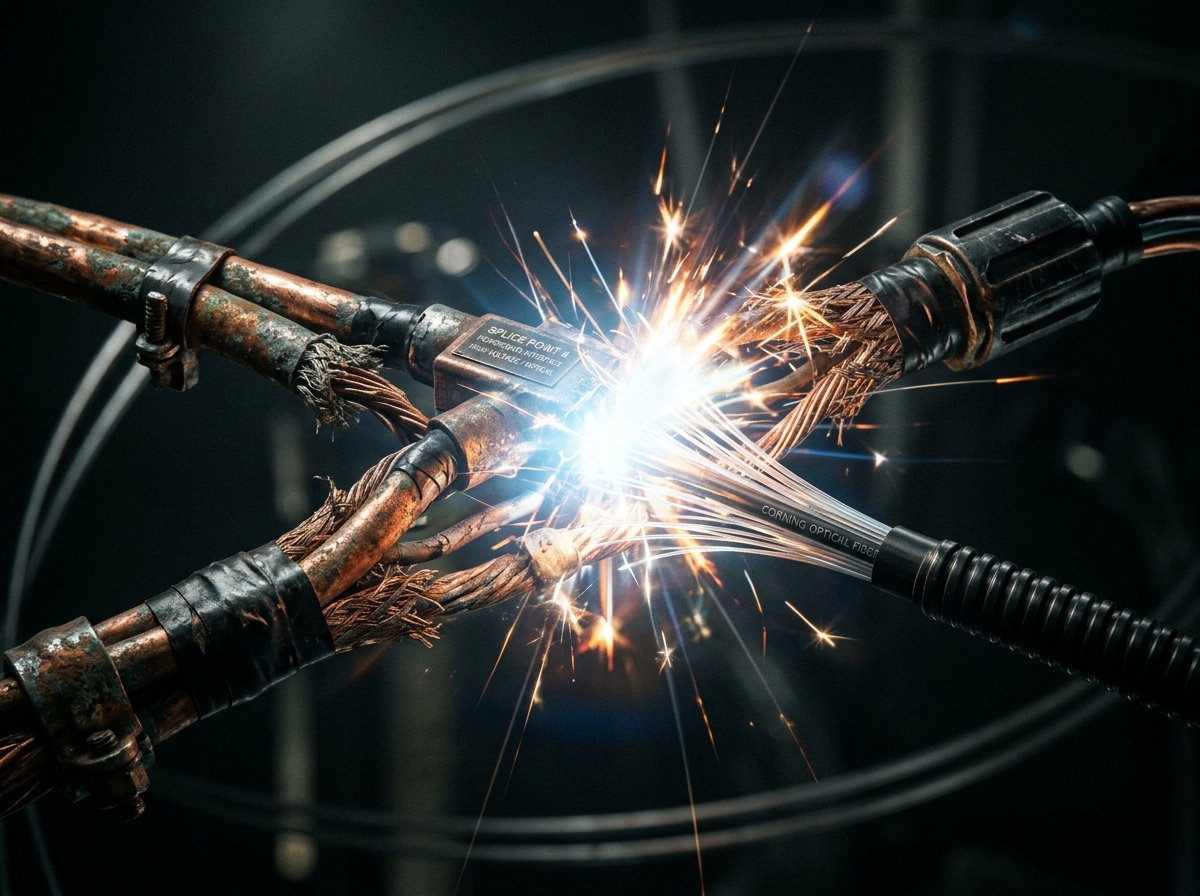
Early attention has centered on newly installed equipment at South Arkansas Regional Airport in El Dorado. Officials said the suspected router generated more than 1,000 connection attempts every four to five seconds while L3Harris was working on a transition from legacy copper wiring to fiber. That volume apparently flooded the broader network with traffic, creating behavior that resembled a distributed denial-of-service event even if no outside attacker was involved.
Traffic that resembles an attack does not inherently establish that a malicious intrusion occurred. Transportation Secretary Sean Duffy stated he does not believe the incident resulted from a cyberattack. CNN also reported that investigators are considering a defective router, contractor or installation error, and configuration problems. Malicious activity remains among the possibilities being assessed, but the available reporting has presented no evidence supporting that explanation.
The forensic work should help investigators separate those scenarios. Testing can examine whether the router repeatedly produces the same connection storm, whether a particular configuration triggers it, and whether the behavior depends on other equipment involved in the copper-to-fiber conversion. Investigators can also compare firmware, logs, configuration files, and network telemetry against known-good installations. Reproducing the failure under controlled conditions would be particularly valuable. If the event cannot be reproduced, however, the inquiry may depend more heavily on historical logs and change records.
L3Harris installed the Arkansas equipment and is assisting the FAA. The contractor stated it has completed more than 70% of the planned conversion from legacy copper lines to fiber-optic infrastructure. Industry reporting has identified HPE's Juniper Networks as the router maker, although the available official evidence has not confirmed the specific model. Cisco and Nokia are comparable enterprise-network suppliers, but neither has been implicated in this incident.
As a precaution, the FAA disabled the broadcast function on approximately 60 to 69 similar routers. ABC News reported on the action as officials sought to prevent another device from generating comparable traffic. That response may reduce immediate risk, but it also raises an operational question regarding how one device apparently propagated enough traffic to affect such a large share of the national system.
The answer may involve more than faulty hardware. Critical networks can become vulnerable to internal traffic storms when segmentation is limited, rate controls are insufficient, or automated safeguards fail to isolate abnormal behavior. Configuration baselines, staged deployments, rollback procedures, and restricted broadcast domains can help contain those failures. Change windows also matter. Performing consequential network work during busy operating periods can leave less room to diagnose an unexpected interaction before users and dependent systems feel the effects.
For enterprise technology leaders, the episode is a reminder that modernization introduces its own transition risk. Replacing copper with fiber can improve capacity and reliability, but the migration process still needs controlled testing, current inventories, clear contractor accountability, and rehearsed incident response. A modern component interacting poorly with a complex legacy environment can trigger widespread outages. The FBI and FAA investigation now has to determine which exact combination brought the national airspace system to a halt.