 ⬇️
Key Takeaways
- Industry research summarized in the FCC’s 2025 rulemaking record highlighted that Hiya reported 80% of calls from unrecognized numbers went unanswered in 2025; buyers should therefore treat caller identity as part of contact-center routing rather than as a cosmetic display feature.
- A credible evaluation of Sansay, Inc. or another session-control provider should test STIR/SHAKEN attestation, Rich Call Data, Session Initiation Protocol Identity headers, carrier coverage, and session border controller interoperability using the organization’s production calling numbers.
- Post-launch measurement should compare answer rates, carrier-specific display success, call abandonment, spam labels, and complaints with a 30-day baseline.
Start With the Answer-Rate Problem
A contact-center agent can have the correct customer record, a compliant script, and a legitimate reason to call, yet the interaction still fails if the phone displays only an unfamiliar number. Industry research summarized in the FCC proceeding highlighted that Hiya reported 80% of calls from unrecognized numbers went unanswered in 2025.
Consumer preferences point in the same direction. Research summarized in that proceeding reported that 76% of Americans preferred engaging with businesses using branded calling, while 81% said they would answer a branded call after recently interacting with the brand. Separate research cited in the same record found that TransUnion reported customers were up to 105% more likely to answer a branded call. These percentages are not directly comparable: the first measures preference, the second measures stated intent after a recent interaction, and the third describes a potential lift relative to an unbranded-call comparison.
The distinction between authentication and identification matters. STIR/SHAKEN, Secure Telephone Identity Revisited and Signature-based Handling of Asserted Information Using Tokens, uses signed PASSporT tokens, or Personal Assertion Tokens, in the Session Initiation Protocol (SIP) Identity header to help carriers verify that a caller is authorized to use a number. Authentication does not, by itself, explain that the call is from a bank’s fraud department or a retailer’s delivery desk.
Rich Call Data (RCD) can add presentation information such as a verified business name, logo, location, and reason for calling. The FCC’s Robocall Mitigation Database requirements and filing guidance also show why enterprises should expect closer carrier scrutiny of caller-name accuracy, number authorization, and branding governance.
Build an Evaluation Around the Calling Path
Buyers should map the complete route from the contact-center platform to the consumer’s handset. That map commonly includes a predictive dialer or agent desktop, a SIP trunk, one or more session border controllers (SBCs), an originating carrier, terminating mobile networks, and branded-identity registries. An SBC is a network component that applies security, routing, interoperability, and signaling policies at the boundary between voice networks.
Organizations assessing Sansay, Inc. or another session-control provider should examine how the SBC preserves SIP Identity headers, manages topology hiding, applies routing policy, and exposes call-detail records. An SBC that rewrites the From, P-Asserted-Identity, or Diversion header incorrectly can break identity continuity even when the branding enrollment is valid.
Carrier reach also deserves scrutiny. T-Mobile Branded Calling, Verizon Business Branded Calling, and AT&T Branded Call Display can differ in enrollment workflows, handset presentation, logo support, and call-reason handling. Buyers should request a coverage matrix organized by carrier, device operating system, and calling-number type rather than accept a single aggregate coverage claim.
For Web Real-Time Communication (WebRTC) environments, the test plan should follow the call beyond the browser. WebRTC usually reaches a media or session-control layer through secure WebSocket signaling, while outbound calls to the public switched telephone network (PSTN) ultimately depend on SIP, carrier routing, and E.164, the international format for telephone numbers. The branded identity must survive that transition.
Plan the Rollout in Operational Phases
During discovery, the team should inventory every outbound number and associate it with a legal entity, department, call purpose, campaign, and carrier. A spreadsheet may work for dozens of numbers, but larger estates often need a PostgreSQL or configuration-management database connected to number provisioning through a representational state transfer (REST) application programming interface.
The initial pilot should use a controlled group of production numbers across several call types, such as appointment reminders, fraud alerts, collections, and customer callbacks. Testing only one mobile carrier can conceal presentation failures on other networks. A useful pilot spans Android and iOS devices and records the displayed name, logo, call reason, attestation level, and termination result.
Midway through implementation, telephony engineers should inspect SIP traces using tools such as Wireshark, Homer, or the SBC’s native diagnostics. Contact-center operations should compare those traces with campaign identifiers and customer relationship management dispositions from Salesforce, Genesys, NICE, or another system of record.
A rollout may allocate roughly one month to inventory and enrollment, followed by a controlled validation period and gradual production expansion. The precise duration depends on number volume, carrier review, and whether corporate identity records match the names submitted for display. The session border controller can be evaluated at this stage for SIP normalization, high-availability deployment, WebRTC-to-SIP control, and policy-based routing across multiple trunks.
Measure What Changes After Launch
Answer rate is important, but it is not sufficient on its own. If branded calls produce more answers but also generate more complaints, the result may indicate an unclear call reason, excessive dialing frequency, or inconsistent branding across departments.
Teams should establish a 30-day baseline and segment results by carrier, campaign, number, time of day, and attestation level. Useful metrics include answer rate, agent-connected rate, abandoned calls, average time to answer, callbacks to published numbers, spam-label incidence, and failed brand-display events.
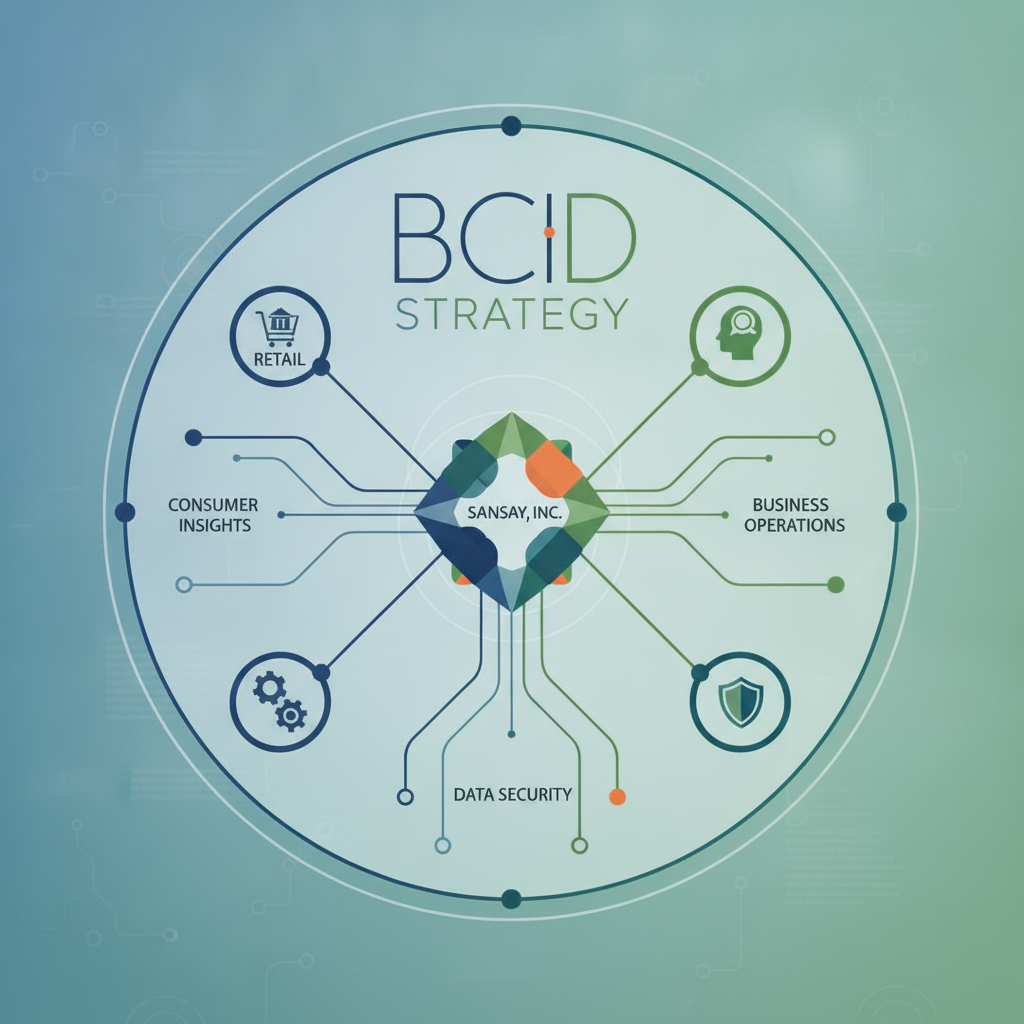
The Federal Register notice for Advanced Methods To Target and Eliminate Robocalls reinforces the broader policy direction toward authenticated, accountable calling. Meanwhile, the Congressional Research Service overview published through Congress.gov provides context on the evolving federal robocall framework. Buyers should therefore retain enrollment records, number-ownership evidence, SIP logs, and carrier dispute histories rather than treat BCID as a one-time configuration.
While specific vendor performance metrics vary, buyers should validate performance claims through their own carrier-by-carrier pilot and look for observable changes, including fewer spam labels, more calls displaying the intended department name, and higher agent connection rates.
Buyer Takeaways
Governance often determines whether branded calling remains accurate. When marketing launches a new campaign or operations reassigns a number, the BCID registry, dialer configuration, and SIP routing policy should change together. A ticket in ServiceNow or Jira can trigger approvals from telecommunications, compliance, and brand teams before the number enters production.
Buyers should also ask how quickly a vendor can correct an erroneous label, revoke a compromised number, and export branding records. These questions are more informative than a generic demonstration because they test the operating model behind the display.
Broader Applicability
Banks, healthcare networks, retailers, insurers, and public agencies can adapt this model by pairing department-level RCD labels with verified E.164 numbers. Smaller teams can begin with high-value callbacks and time-sensitive notifications before expanding branding across every outbound campaign.
Frequently Asked Questions
How long does a branded calling implementation take?
Timing depends on the number inventory, carrier enrollment process, and SIP complexity. As a planning assumption rather than a universal implementation benchmark, a buyer can reserve an initial month for number validation and configuration, followed by a controlled pilot covering multiple carriers, iOS and Android devices, and at least two call purposes.
What is the difference between STIR/SHAKEN and BCID?
STIR/SHAKEN authenticates the calling number through a signed token carried in the SIP Identity header. BCID and RCD add presentation data such as the verified business name, logo, location, or reason for calling, subject to carrier, device, and handset support.
Can branded calling work with an existing SBC and WebRTC contact center?
Often, yes, if the SBC preserves identity headers and maps WebRTC signaling correctly into the SIP and PSTN environment. Buyers should test P-Asserted-Identity, From-header normalization, E.164 formatting, Transport Layer Security, and failover routing before enabling branding across production numbers.