 ⬇️
Key Takeaways
- John Deere acquired Orchard Robotics in November 2026 for undisclosed terms.
- Orchard Robotics uses camera systems and computer vision to assess individual plants, fruit, trees, vines, crop health, growth, and yield.
- The acquisition could connect plant-level data with John Deere equipment, but adoption will depend on economics, interoperability, and confidence in AI-generated recommendations.
John Deere has acquired Orchard Robotics, bringing a crop-monitoring artificial intelligence startup into its expanding precision-agriculture portfolio. The transaction was completed in November 2026, and financial terms were not disclosed.
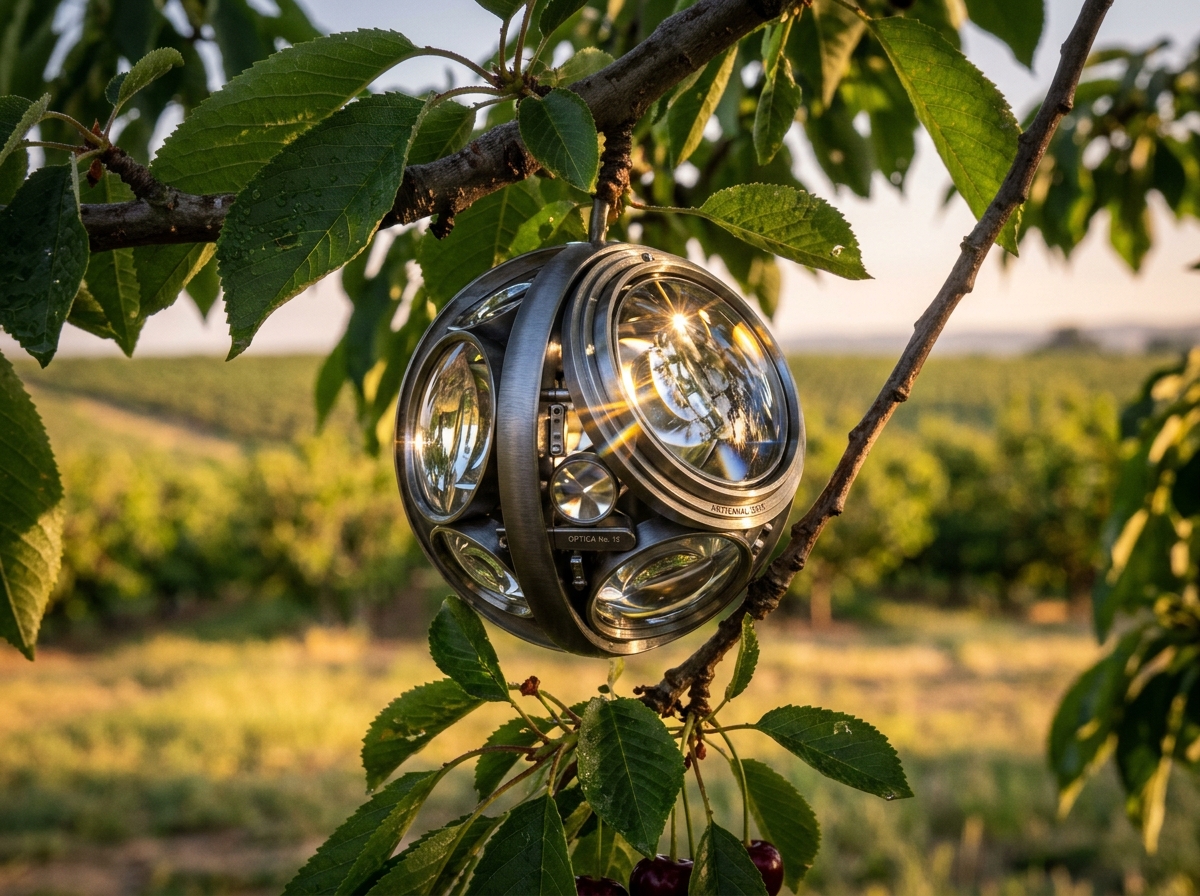
Orchard Robotics, which has an office in Seattle, develops camera-equipped systems that gather data as agricultural equipment moves through fields and orchards. Its computer-vision technology measures fruit, trees, vines, crop health, growth, and expected yield. The practical aim is straightforward: give growers a more detailed view of what is happening at the plant level, rather than relying only on field averages or periodic manual sampling.
That distinction matters. Many established precision-agriculture systems are strongest at guiding machinery, mapping fields, controlling inputs, or recording what happened during a field operation. Orchard Robotics adds another layer, using visual data to identify conditions around individual plants and translate those observations into information that can support decisions.
For John Deere, the acquisition creates an opportunity to connect that intelligence with its tractors, autonomous machinery, and precision equipment. A camera system might detect variation across an orchard, for example, while connected equipment could eventually help a grower respond with more targeted treatments or field operations. The acquisition itself does not establish how quickly such integration will occur, but the strategic direction is clear.
Agricultural AI becomes more valuable when it can influence work in the field. A grower does not just need another dashboard. The information has to arrive at the right time, fit existing workflows, and support a decision involving labor, equipment, thinning, spraying, irrigation, or harvest planning.
Adoption remains uneven. A 2025 analysis from Farmonaut cited USDA data showing that 70% of large-scale crop farms used GPS guidance or autosteering in 2023, while 68% used yield monitors or soil maps. Yet the USDA National Agricultural Statistics Service reported in 2025 that 22% of U.S. farms had used at least one precision-agriculture practice during the prior year. Farm size, crop type, connectivity, capital availability, and technical support can all shape that gap.
Specialty crops also present different automation challenges than broad-acre farming. Orchards contain irregular canopies, changing light, overlapping fruit, variable terrain, and biological differences that can complicate computer vision. A model that performs well in one variety, season, or location may need additional validation elsewhere. Can the system maintain useful accuracy when dust, shadows, weather, and foliage change? Field performance dictates real-world viability far more than controlled demonstrations.
Even so, investment interest is rising. Global AgTech Initiative reported a Global Market Insights estimate placing the fruit-thinning-robot market at approximately $65.7 million in 2025, with a forecast of about $324.5 million by 2035, representing roughly 17% compound annual growth. Orchard monitoring is not identical to robotic thinning, but both categories depend on reliable perception at the fruit or plant level.
The USDA Agricultural Research Service has also identified IoT systems, sensors, robotics, drones, autonomous machinery, and agricultural data pipelines as priority technologies for improving farm decisions and productivity. John Deere’s deal fits that broader movement toward combining sensing, analysis, and machine action.
Integration will be one of the harder parts. ISO 11783, commonly known as ISOBUS, provides a communication standard for agricultural machinery, but data formats, software environments, and equipment generations still vary. John Deere will need to show how Orchard Robotics information can work across practical farm environments, including operations that use equipment from Trimble Agriculture, AGCO, or CNH Industrial’s Raven systems.
Governance deserves attention too. The NIST AI Risk Management Framework offers a useful reference for evaluating computer-vision systems, including accuracy, monitoring, transparency, and human oversight. Growers will likely want to understand how recommendations are produced, how errors are detected, who controls collected imagery, and whether historical farm data can move between systems.
The acquisition gives John Deere a potentially important bridge between seeing and doing. Orchard Robotics can help equipment observe crops in greater detail; John Deere can provide machinery, distribution, and operational reach. If this integration translates into measurable field value, plant-level intelligence could become a more central part of everyday farm management rather than a specialized analytics feature.