 ⬇️
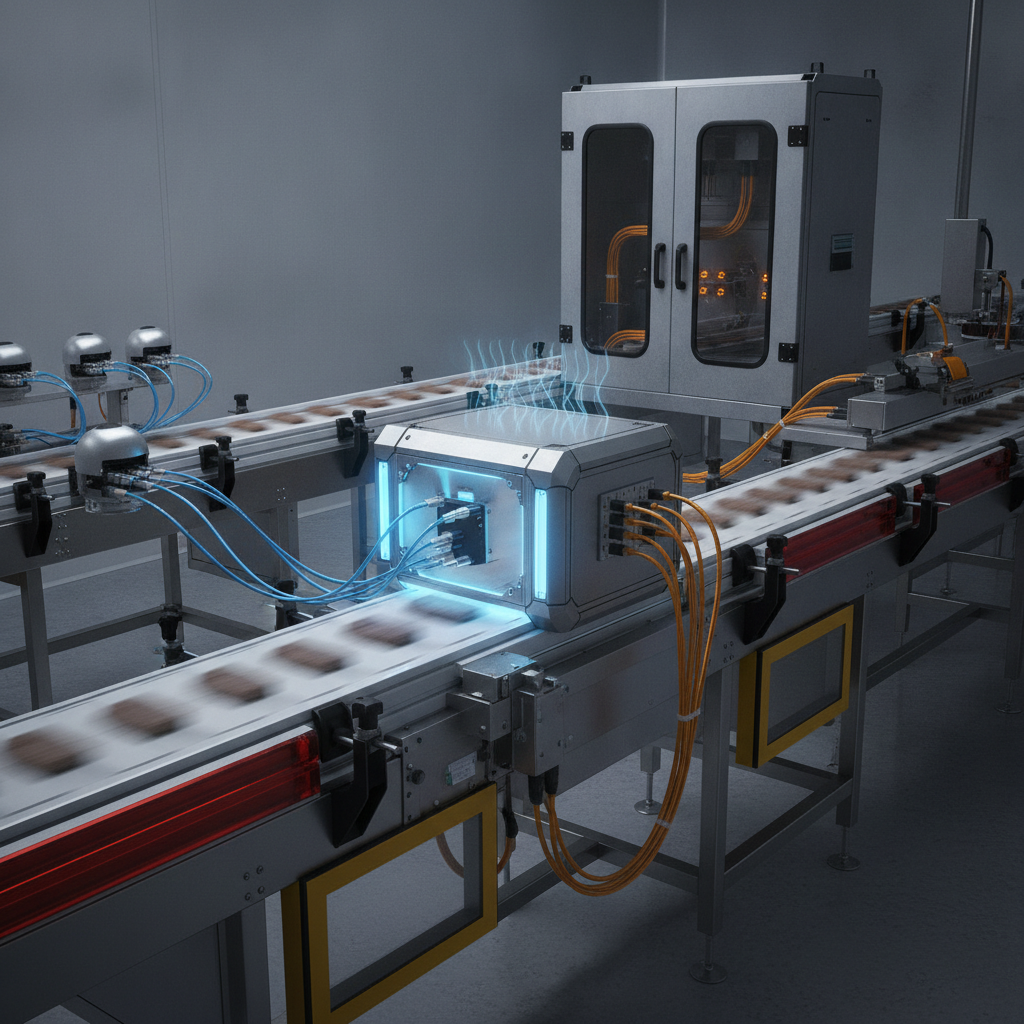
A rugged industrial edge controller processes machine-vision and sensor data beside production equipment, reducing decision latency and network traffic while leaving deterministic control and functional safety to programmable logic controllers and certified safety hardware.
Key Takeaways
- A Variscite System on Module can provide local machine-vision inference, while a custom carrier board exposes Time-Sensitive Networking Ethernet, cameras, fieldbuses, and fail-safe I/O.
- An edge controller can use OPC Unified Architecture to publish defect images, condition alerts, and production metadata instead of sending every video frame and sensor sample upstream.
- A Variscite evaluation kit allows engineers to test Linux images, AI models, thermal behavior, and peripheral compatibility before they commit to a production carrier board.
Why Factory Inspection Needs Edge Control
A camera may identify a flawed weld only for the inspection server to respond after the part has passed the rejection station. At the same time, thousands of routine vibration readings can obscure the comparatively few maintenance signals that require attention.
Consider a composite automotive supplier operating robotic welding and inspection cells. Each cell combines industrial cameras, vibration sensors, encoders, safety devices, and a programmable logic controller (PLC). The supplier wants local AI inference for visual inspection and predictive-maintenance signals, but it also needs deterministic communication, meaning communication with predictable timing, across existing automation equipment.
Scale makes that challenge more pressing. The International Federation of Robotics reported 603,307 industrial-robot shipments during 2025, an 11.2% annual increase, with operational stock exceeding 5 million units (ifr.org). China represented 354,226 shipments, while the Americas reached 57,044.
Those regional differences affect embedded design. A controller intended for several plants may need locally configurable 24-volt I/O, Gigabit Ethernet, Controller Area Network (CAN), RS-485 serial communication, camera interfaces, and plant-specific protocol support. It also has to operate inside a cabinet where heat, dust, electrical noise, and limited airflow constrain processor selection.
Sending every image to a remote server is rarely practical. Network congestion can introduce variable inspection latency, while a cloud interruption should not disable a reject gate or machine stop. Functional safety remains with appropriately rated safety hardware; the AI controller supplies inspection results and maintenance signals rather than replacing certified safety functions.
How a System on Module Supports Factory Inspection
The proposed architecture relies on a production System on Module (SoM). A SoM is a compact computing board that combines the application processor, memory, power-management components, and high-speed interfaces. A custom carrier board connects that module to plant-facing hardware.
That division matters. Engineers can evaluate modular compute independently of the physical I/O design and then create a carrier board with M12 industrial Ethernet connectors, isolated digital inputs, protected CAN transceivers, and camera connections such as MIPI Camera Serial Interface 2 (MIPI CSI-2) or USB 3. The enclosure can conduct heat from the processor to a metal chassis rather than relying on a fan. Procurement teams can also compare modules from vendors such as Toradex or Digi International when evaluating processor support, operating-temperature ranges, lifecycle commitments, and software maintenance.
At the software layer, Linux hosts the machine-vision pipeline and an OPC Unified Architecture (OPC UA) server. OPC UA is an industrial interoperability standard for exchanging structured machine data. A separate PLC or real-time controller implements IEC 61131-3 logic for deterministic machine sequences. Time-Sensitive Networking (TSN), a set of Ethernet standards for bounded latency and scheduled traffic, provides predictable communication where supported, while conventional Ethernet maintains compatibility with manufacturing execution systems and historian databases.
The controller does not forward raw data indiscriminately. It performs image inference and vibration preprocessing at the machine, retains short diagnostic buffers locally, and publishes defect records, model-confidence values, equipment states, and selected images through OPC UA.
How to Implement a Rugged Industrial Edge Controller
During evaluation, the controls engineer, embedded Linux developer, machine-vision specialist, electrical engineer, and plant cybersecurity lead work from an evaluation kit. Their first tests cover camera drivers, model-runtime compatibility, boot behavior, storage endurance, and communication with the existing PLC.
The production design then moves to a carrier-board prototype. The selected module supplier provides the modular compute foundation, while the project team defines connector placement, galvanic isolation, watchdog behavior, secure-boot configuration, and thermal coupling for the target enclosure.
One obstacle emerges during camera testing: inference load raises processor temperature inside the sealed cabinet. Rather than lowering inspection frequency, the engineers revise the heat spreader and use dynamic performance profiles. They also reserve compute headroom so that an updated model does not immediately force a board redesign.
A second issue concerns failure handling. If the Linux application stops responding, a hardware watchdog resets the application processor, but the PLC retains control of machine interlocks. Signed software images, a read-only recovery partition, and an A/B update layout, which maintains separate active and fallback software partitions, reduce the chance that an interrupted update leaves the inspection controller unavailable.
Before production release, the team runs electromagnetic-compatibility testing, temperature cycling, network-failure tests, and extended camera workloads. The organization has not disclosed a specific customer timeline, so buyers should treat the schedule as dependent on carrier-board complexity, compliance testing, and the number of legacy protocols involved. The evaluation and implementation process should include the production camera, enclosure, PLC, and expected inference workload.
Industrial Edge Controller Results
In this composite scenario, local inference made inspection decisions available within the machine cycle rather than only after server-side processing. Operators could view a defect image, confidence score, part identifier, and PLC state in one record instead of reconciling separate camera and automation logs.
Data handling also became more selective. The plant historian received OPC UA events and condition summaries, while full-resolution video remained local unless a defect or diagnostic rule triggered retention. That change reduced routine network traffic and gave maintenance staff a narrower set of records to review.
According to IDC, worldwide edge-computing spending reached $265 billion in 2025 and is forecast to approach $450 billion by 2029. IDC’s manufacturing examples include AI-enabled quality control, predictive maintenance, and autonomous material handling, all of which require engineers to decide which processing belongs near the machine.
Specific defect-rate, downtime, and maintenance-cost metrics have not been disclosed for this scenario. The observable changes are architectural: inspection continues during an upstream network outage, raw sensor traffic is filtered locally, and compute modules can be reconsidered separately from the plant-facing carrier board.
Industrial Edge Computing Lessons for Manufacturers
Thermal validation changed the physical design, not just a software setting. Running the actual vision model inside the sealed enclosure exposed heat-spreader limitations that a desktop benchmark would have missed.
The watchdog test also clarified system boundaries. Resetting Linux could restore the vision application, but only the PLC and rated safety components remained responsible for interlocks and emergency behavior.
Finally, the evaluation kit reduced uncertainty around camera drivers and inference runtimes before carrier-board fabrication. That sequence helped the electrical team avoid committing printed-circuit-board space to interfaces that the production software stack could not support reliably.
Industrial Edge Control Applications Beyond Automotive Plants
Food processors could adapt the same pattern for package inspection, fill-level detection, or motor monitoring, using washdown-rated enclosures and connectors suited to food-production environments. Omdia identifies Ethernet, 5G, TSN, and single-pair Ethernet as factors shaping industrial communications, so a modular carrier design can help accommodate plant-specific networking choices.
Industrial Edge Controller FAQ
Industrial Edge Controller Project Timeline
A prototype based on an evaluation kit may be exercised within several months, but a production carrier board often requires additional design, electromagnetic-compatibility testing, thermal validation, and manufacturing preparation. Schedule estimates should include at least one printed-circuit-board revision and extended testing with the actual camera, enclosure, and PLC.
What Is the Difference Between a SoM and a Carrier Board?
The SoM contains the processor, RAM, power-management circuitry, and core high-speed interfaces. The carrier board connects that compute module to application-specific hardware such as 24-volt digital I/O, M12 Ethernet, CAN, RS-485, MIPI CSI-2 cameras, and watchdog circuits.
Should AI Replace the PLC on an Automated Line?
Usually not for deterministic sequencing or safety functions. A practical design allows the AI subsystem to classify images and detect maintenance patterns, while an IEC 61131-3 PLC handles machine logic and appropriately rated safety equipment controls emergency stops and interlocks.